Wat Arun at Night: The Story Behind Bangkok's Temple of Dawn
Discover the history behind Wat Arun, Bangkok's Temple of Dawn, and why it's one of the most striking illuminated landmarks to see along the Chao Phraya River at night.
Wat Arun at Night: The Story Behind Bangkok's Temple of Dawn
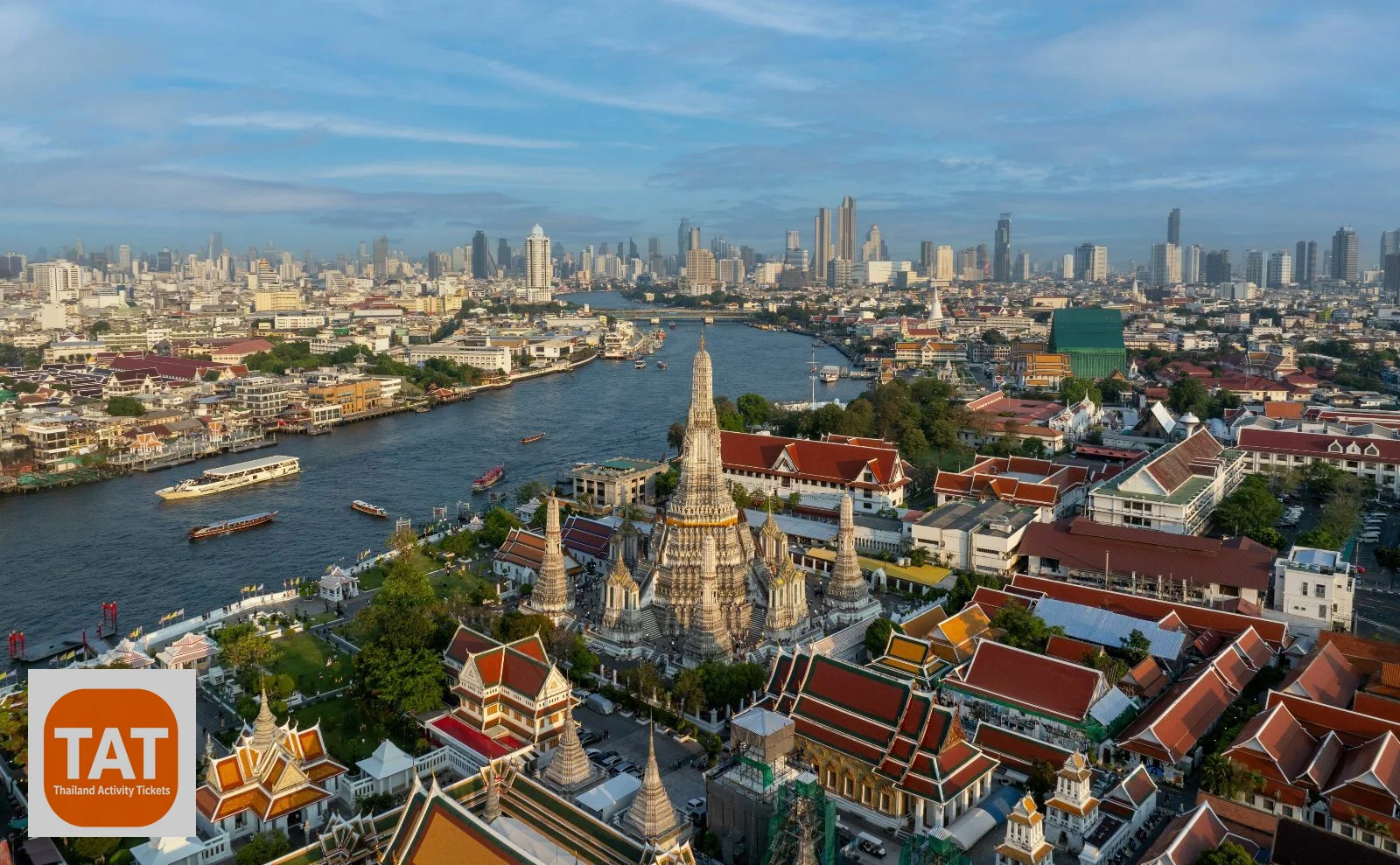
Few landmarks define Bangkok's skyline the way Wat Arun does. By day, its intricately decorated spire rises above the Chao Phraya River in pale, porcelain-flecked tones. By night, floodlights transform it into one of the most photographed silhouettes in the city — a fixture on nearly every riverside itinerary. Here's the story behind the temple, and why it looks the way it does after dark.
What Is Wat Arun?
Wat Arun, officially Wat Arun Ratchawararam, is a Buddhist temple on the western (Thonburi) bank of the Chao Phraya River, directly across from the Grand Palace. Its name translates to "Temple of Dawn," a reference to Aruna, the Hindu god personifying the light of the rising sun.
Why Is It Called the Temple of Dawn?
According to popular tradition, the temple takes its name from the moment King Taksin arrived at the site at dawn after the fall of Ayutthaya in the 18th century, choosing the location to establish a new capital. Whether or not the exact timing of that arrival is historically precise, the name stuck, and the temple has carried the association with sunrise ever since — even though, ironically, it's now far more famous for how it looks at sunset and after dark.
A Brief History of Wat Arun
The site itself predates the temple's current form, having existed as a local shrine as far back as the Ayutthaya period. It rose to prominence under King Taksin, who made it part of the royal palace complex when Thonburi briefly served as Thailand's capital. The temple was later expanded significantly under King Rama II and King Rama III in the early 19th century, when its central prang — the tall, corn-cob-shaped tower that defines the temple's silhouette today — was raised to its current height of roughly 70 meters.
The Design That Makes It Unmistakable
Unlike many of Bangkok's gold-roofed temples, Wat Arun's central prang is covered in a distinctive mosaic of colorful porcelain and seashell fragments, arranged in intricate floral patterns. Historically, much of this material came from Chinese porcelain used as ballast on trading ships, repurposed by artisans into decoration rather than shipped as waste. The result is a texture and color palette unlike any other major temple in the city — pale by day, but strikingly reflective under floodlighting at night.
Why Wat Arun Looks Different After Dark
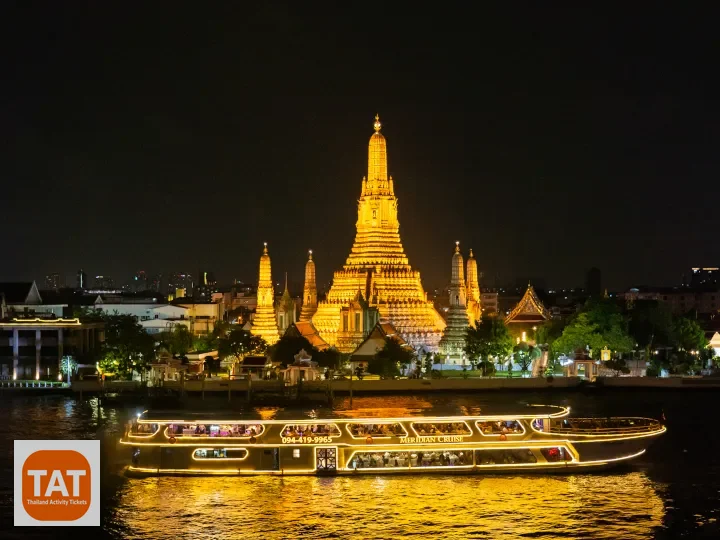
The temple's nighttime illumination is a relatively modern addition, designed specifically to highlight the layered detail of the prang that can be harder to appreciate in daylight. Floodlights placed around the temple grounds cast warm light upward across the tiers of the spire, making the porcelain inlay catch and scatter light in a way that gives the whole structure a glowing, almost sculpted appearance from across the river — which is exactly why it's become such a signature sight for anyone viewing Bangkok's skyline from the water after sunset.
The Best Way to See Wat Arun at Night
While it's possible to view Wat Arun from various points along the riverbank, the most complete view is from the water itself, where the temple's full height and lighting design are visible without buildings or trees breaking the sightline. Evening river cruises along the Chao Phraya routinely pass directly in front of it, making it one of the most reliable "must-see" landmarks on any nighttime itinerary — including on the Meridian Dinner Cruise from Iconsiam, which sails past Wat Arun as part of its route toward the Rama VIII Bridge.

Alangka Dinner Cruise Bangkok Tickets

Chao Phraya Princess Dinner Cruise Bangkok Tickets

Chao Phraya White Orchid Dinner Cruise Tickets

Meridian Dinner Cruise Bangkok from Iconsiam
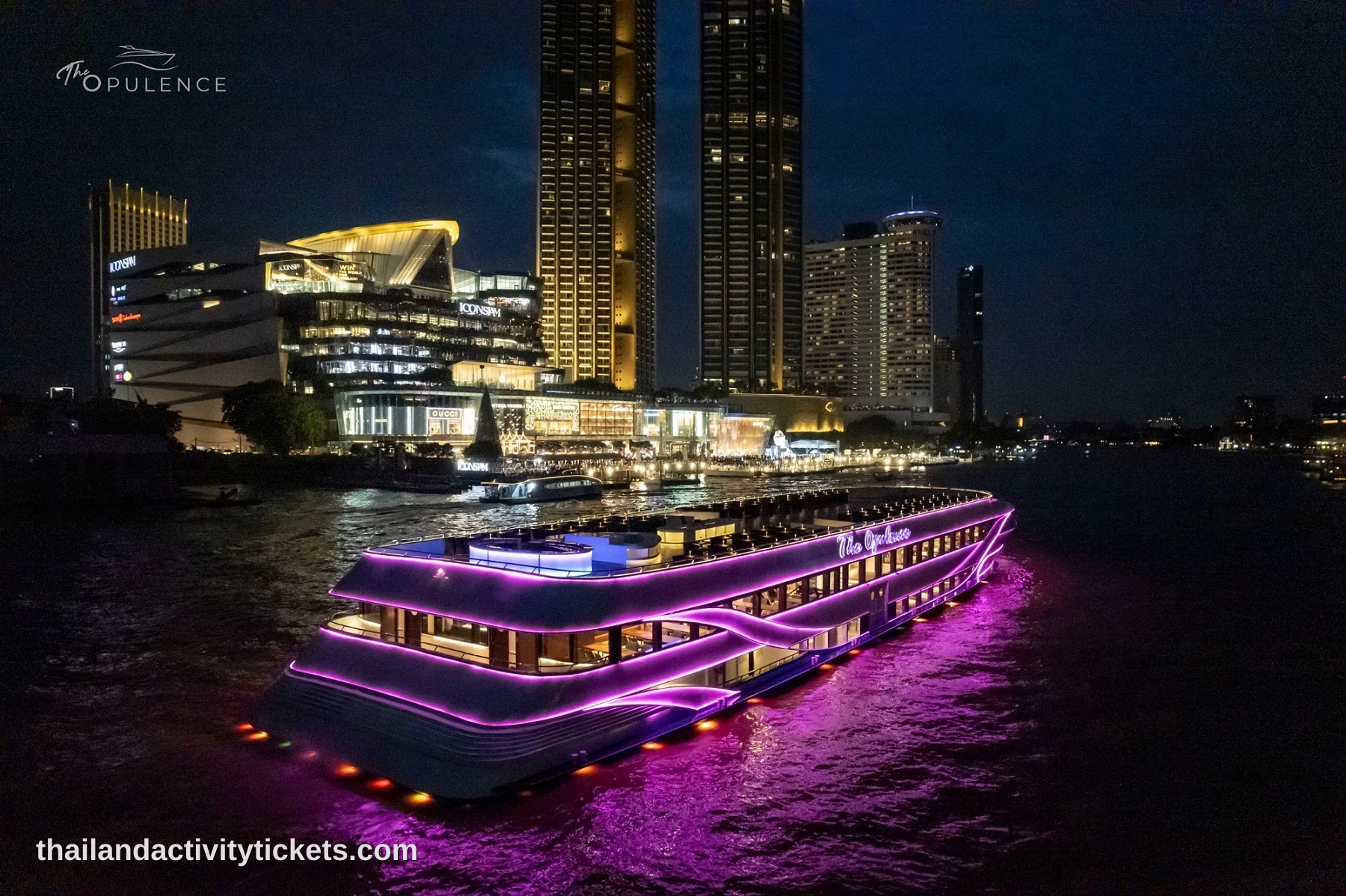
The Opulence Luxury Cruise: Bangkok’s Most Elite 3-Deck Dining Journey
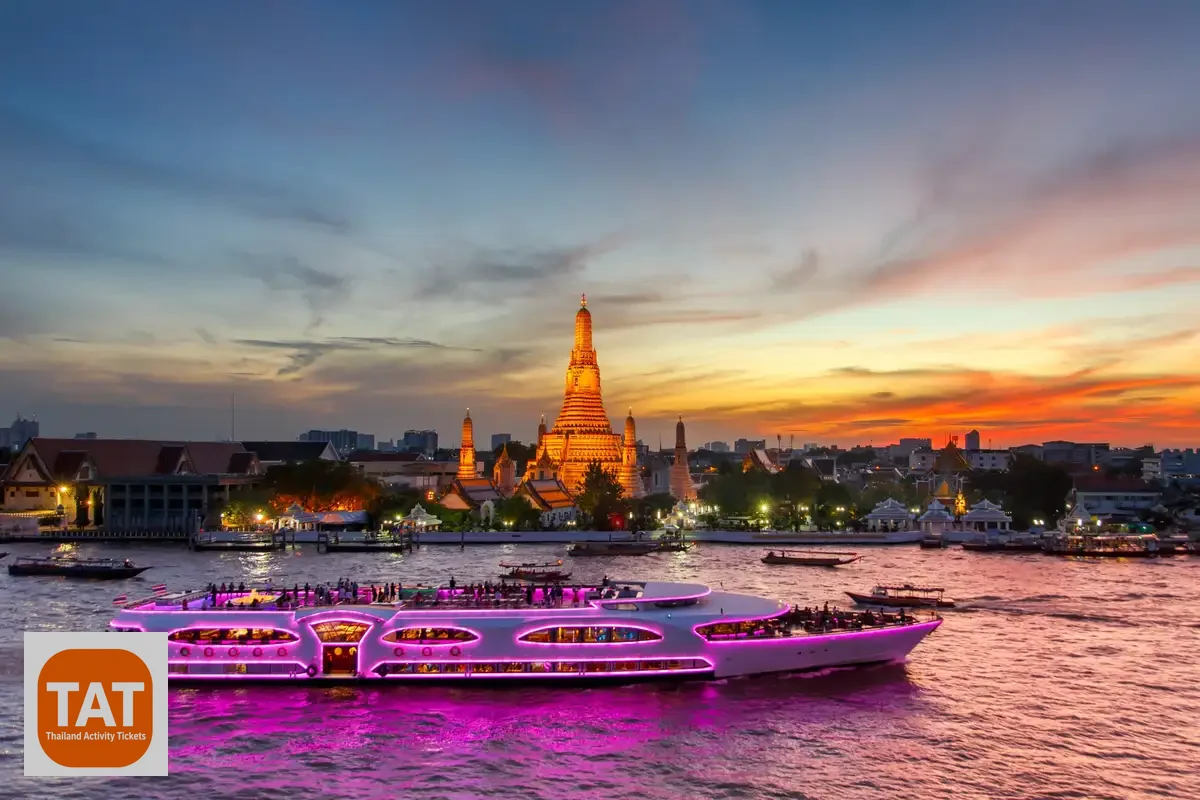
Wonderful Pearl Dinner Cruise Bangkok Tickets – River City Pier
Explore Destinations
Frequently Asked Questions
Wat Arun means "Temple of Dawn," named after Aruna, the Hindu god associated with the light of the rising sun.